What’s up plant lovers? If your Christmas cactus is giving you the cold shoulder when it comes to blooming, don’t worry—you’re definitely not alone.
These festive plants can be a bit dramatic, but once you understand what they want, they’re actually pretty easy to care for.
In this guide, I’m walking you through everything from light and watering to propagation and bloom-boosting tricks. Let’s get into it!
Contents
- 1 1. Let There Be Light (But Not Too Much)
- 2 2. Watering: It’s Not a Schedule, It’s a Vibe
- 3 3. Step Away From the Repotting
- 4 4. Keep It Cozy (Not Cold)
- 5 5. Fertilizer: Yes, But Timing Is Everything
- 6 6. How to Force a Christmas Cactus to Bloom (The Sneaky Way)
- 7 7. Prune It Like You Mean It (Then Propagate)
- 8 8. Christmas Cactus vs. Thanksgiving Cactus – Wait, There’s a Difference?
- 9 Conclusion
1. Let There Be Light (But Not Too Much)
Yes, your Christmas cactus can survive in low light—but if you want blooms instead of a moody plant sulking in the corner, you’ll want to give it bright, indirect natural light.
Stick it near a window (but not in full blazing sun) and you’ll be setting the stage for flower power.
Already doing this and still no blooms? Hang tight—I’ve got a trick for that coming up.
2. Watering: It’s Not a Schedule, It’s a Vibe
One of the most common questions I get is: “How often should I water my Christmas cactus?”
And my answer? It depends. (I know, super helpful, right?)
Things like your climate, lighting, and how root-bound the plant is all come into play. Instead of guessing, just poke your finger in the soil. If it’s dry—go ahead and water. If it’s still damp—put the watering can down.
Also, quick tip: this isn’t a desert cactus—it’s an epiphytic cactus, which means it likes oxygen around the roots. So if you’re keeping the soil constantly soggy, you’re basically giving it root rot for Christmas. Don’t do that.
3. Step Away From the Repotting
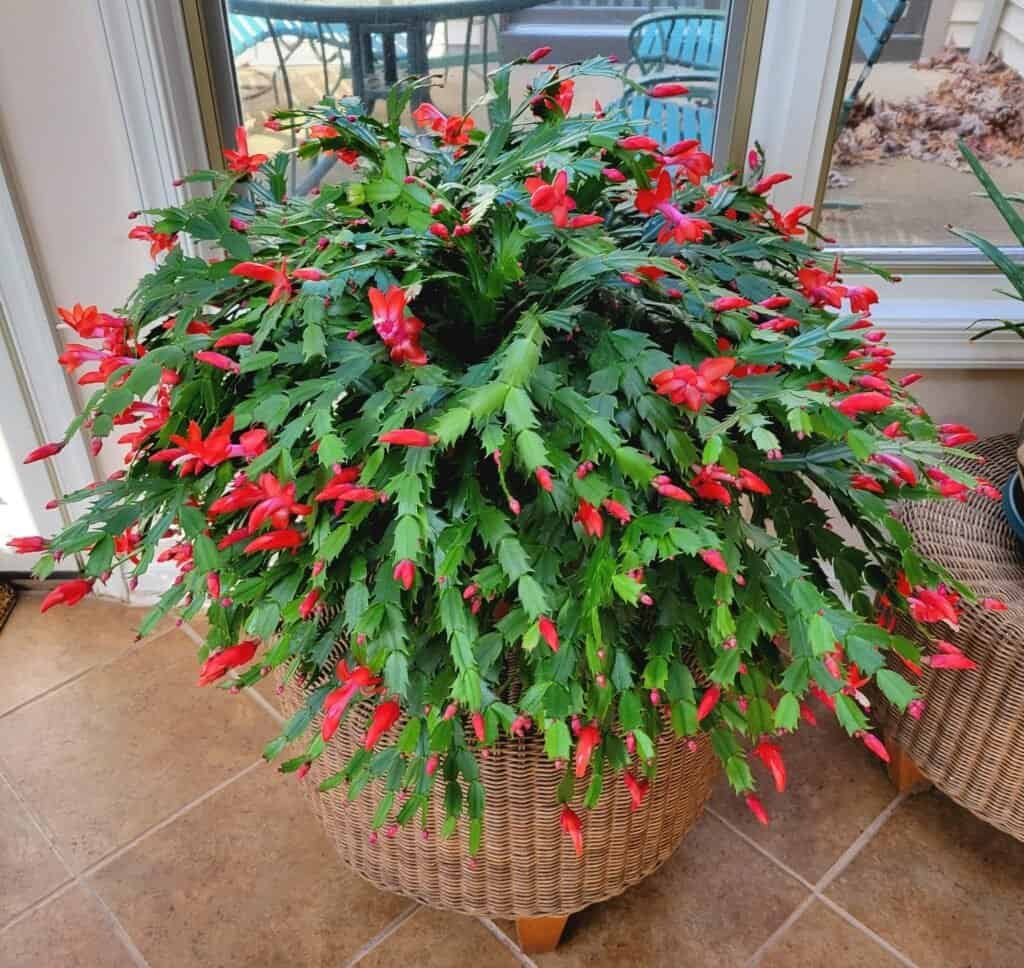
Your Christmas cactus does not need to be repotted every year. In fact, it prefers being a little cramped.
Only repot every 2–3 years, and when you do, use a cactus/succulent mix—or regular potting mix with added perlite for drainage.
Heads up: fresh soil holds more water, so after repotting, ease up on the watering until things balance out. Your cactus will thank you.
4. Keep It Cozy (Not Cold)
Your Christmas cactus likes to chill—but not that kind of chill. Ideal temps are 65–75°F (18–24°C), which just so happens to be where most of us are comfy too.
If you’re in a dry area, consider adding a bit of humidity. No fancy humidifier needed—just grab a shallow tray, toss in some pebbles, add water (just below the top of the rocks), and set your pot on top. Boom: DIY humidity.
5. Fertilizer: Yes, But Timing Is Everything
During the growing season (April–June), feed your cactus monthly with cactus fertilizer, fish emulsion, or even general houseplant food.
But here’s the twist: don’t fertilize before or during blooming. It sounds backwards, but feeding right before blooming can actually interfere with flower production. Trust me—skip the plant food during that time and let it do its thing.
6. How to Force a Christmas Cactus to Bloom (The Sneaky Way)
So, you’ve been doing everything right… and still no blooms? Time to bring out the secret weapon.
Here’s what to do:
-
Let the soil dry out a little more than usual. Not bone dry, but definitely on the drier side.
-
Blackout time! Starting 6–8 weeks before you want blooms, place your cactus in total darkness for 14–16 hours a day.
-
Around 5–6 PM, move it into a dark closet or room.
-
Around 9–10 AM, bring it back into the light.
-
Do this for 7–10 days straight.
-
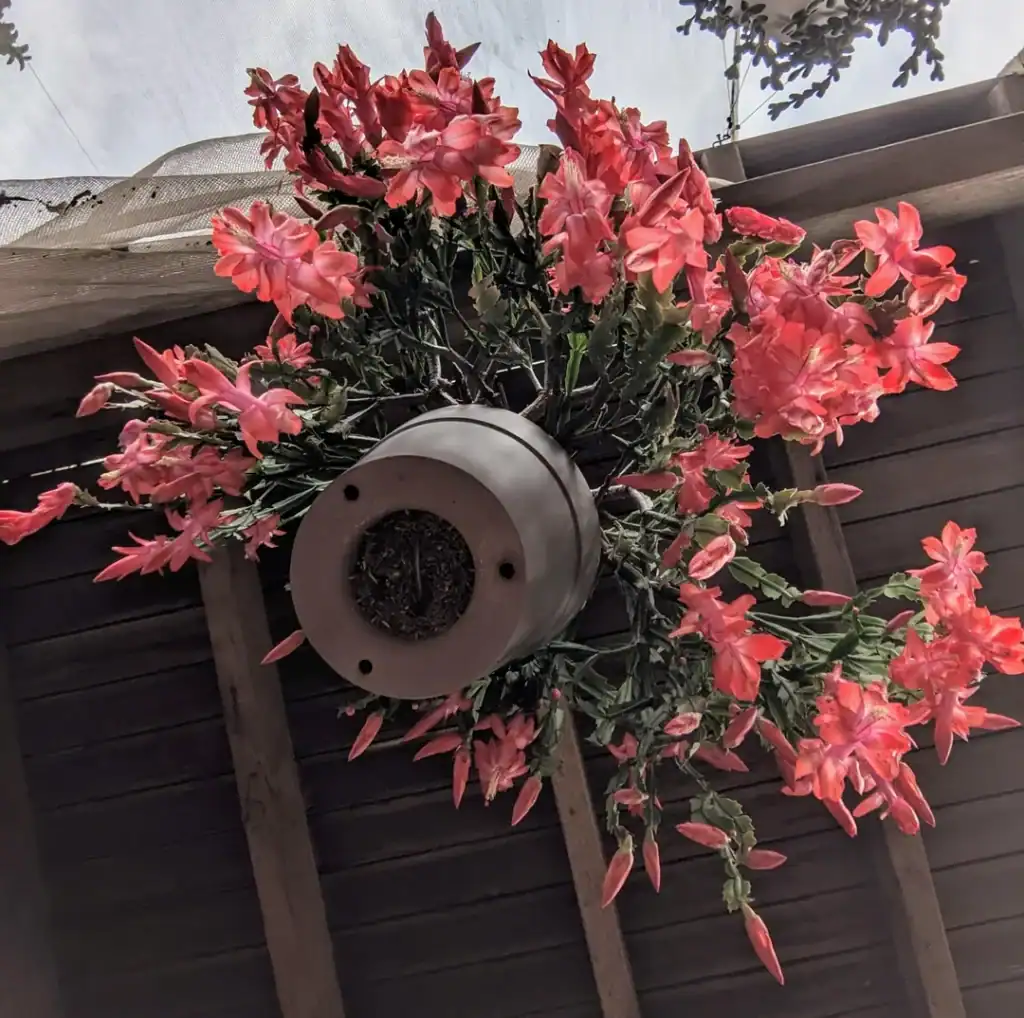
Once you start seeing buds, bring it out for good, place it somewhere with bright, indirect light, and don’t move it around too much. Big shifts in light, humidity, or temperature during blooming = flower drop. And no one wants that.
7. Prune It Like You Mean It (Then Propagate)
Once your cactus is done blooming, it’s the perfect time for a little trim. If it’s looking leggy or out of control, snip between the segments to tidy it up and encourage fuller growth.
And don’t toss those cuttings!
Let them scab over for a couple days, then plant them in moist potting mix. Keep the soil lightly moist, and in about 2 weeks, you’ll have roots. I like to pop 5–6 cuttings in one pot to grow a nice, full cactus.
8. Christmas Cactus vs. Thanksgiving Cactus – Wait, There’s a Difference?
Yup—this is where things get a little confusing. These two are often mistaken for each other, but here’s how to tell them apart:
| Feature | Christmas Cactus | Thanksgiving Cactus |
|---|---|---|
| Leaf Edges | Rounded, scalloped | Pointy, jagged (like little crab claws) |
| Typical Bloom Time | December to January | November to December |
But here’s the good news: they both want the same care, so no need to panic if you’ve been mixing them up.
Conclusion
There you have it—everything you need to know to care for, propagate, and bloom your Christmas cactus like a pro. From blackout tricks to humidity hacks, a little effort goes a long way with this plant.
So go ahead, show your cactus some love, and get ready to enjoy those stunning blooms during the holidays.
Got your own tips or tricks? Drop them in the comments—I’d love to hear what’s working for you!